A short report on the 1999 excavation campaign
The 1999 campaign, the twelfth since the beginning of the new series of
excavations, lasted from June 7 through August 27. Following our plans this year´s number of participants was reduced. At
the peak of the season we counted 60 participants from thirteen countries. In the coming years this number and the extent
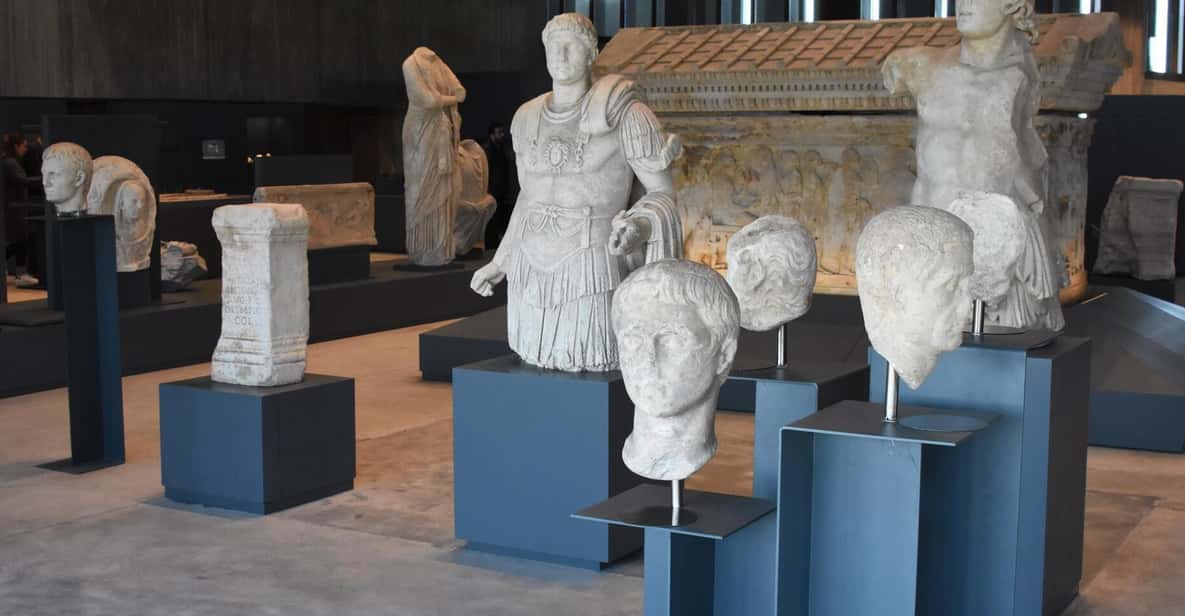
of activities will further decrease owing to the changes in emphasis: Final publications, Troia-Exhibition, installation of
the planned new museum and the historic Troia-National Park.
Ten areas were excavated
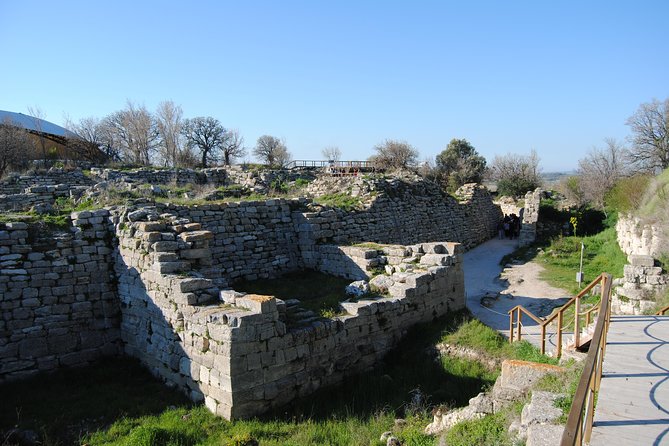
and five sections of the site were restored, two of them for aid to visitors.
The Bronze Age:
Troia I-III (ca. 2600 - 2300 B.C.)
In quadrat FG6 the excavation started in 1997 was extended into an intact area containing
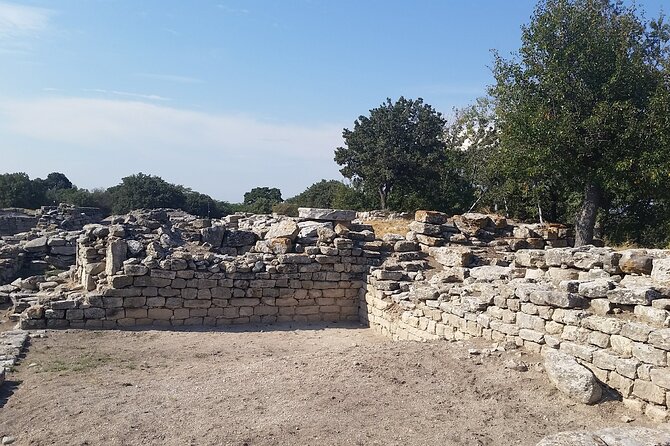
undisturbed structures from Troia VI down to Troia II. The megaron of Phase III uncovered partially in 1998 was completely
opened up including the antae.
The adjacent Gate FO (Troia II ) could clearly be identified as older than the megaron.
Among the three extended burnt layers of Troia I - III our findings put the youngest burnt horizon into a new chronological
sequence; each one of the burnt layers is associated with the various treasure-hoards.
To the north of this megaron two more megara could be identified indicating that in the late phase of the Maritime
Troia Culture the centre of the settlement was shifted. Further investigations occured in quadrats B4 and B5 where the surrounding
of gates FH and FL needed clarification.
Troia VI-VII (ca. 1700 - 1150 B.C.)
Investigations in the Lower City were carried out mainly in three areas:
1. In the settlement area directly west of the citadel (quadrats x7, y8, and z5). Searchtrenches
for the Troia VI - Wall of the lower city assumed in x7 showed that the whole slope region had been cleared for the construction
of a temenos wall around the Troia VIII - Sanctuary. As a consequence, no Troia VI findings are to be expected here. Directly
behind the temenos wall, however, we find intact Troia V layers which we expect to investigate in the year 2000. After all
we are lacking decisive finds and material from this period - just to mention the query for the first occurence of horses
in Troia.
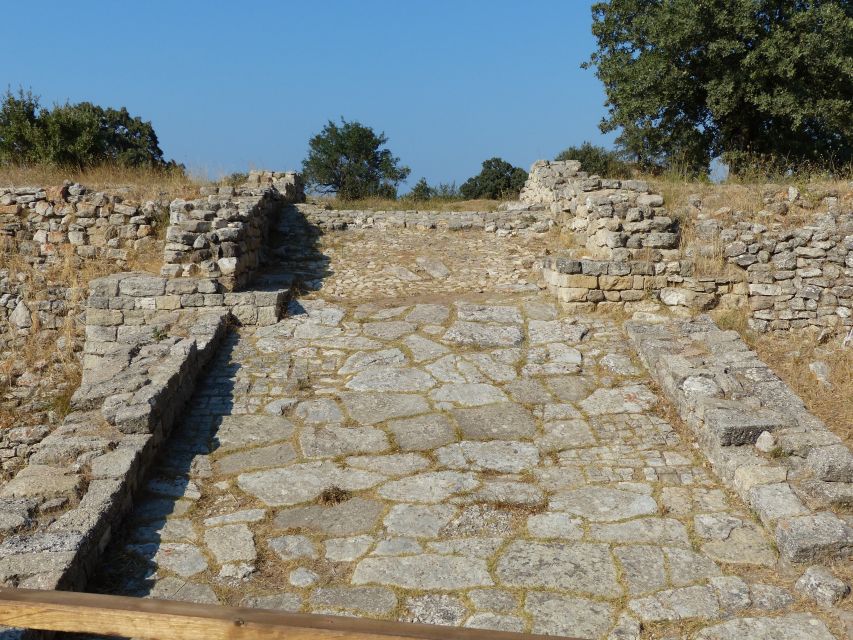
In y8 and z5 we find first good indications for the main access road
to the Troia VI citadel to be expanded in the next campaign.
2. In KL16/17 the
investigation of the "Negative" architecture cut into bedrock as foundation for a wooden bulwark was brought to conclusion
after several years - the rock cut of this bulwark of the Maritime Troia Culture now lies open for a length of 40 m. After
the decay of the bulwark in this area wooden houses were built starting with Troia VI - Early. These Troia VI layers yielded
once more interesting finds.
3. Cave (quadrats u15, tu14). The cave is now almost
completely excavated. Neither in nor in front of the cave prehistoric remains could be identified. The continuously flowing
water no doubt has washed away any potential traces. A promising dating attempt, however, could be made by analysis of the
sinterlayers by the Forschungsstelle Radiometrie in Heidelberg. This analysis puts the first formation of sinter into
the first half of the third millenium B.C. The formation of sinter was continuous and stopped in Roman times according to
this analysis. Witnesses of the frequent use of the spring are the numerous remains of Hellenistic and Roman basins. Four
"wash-basins" uncovered this year might be associated with the Homeric desription of the topography.
Post-Bronze Age:
Troia VIII, IX, and X.
Excavation activities of the Post-Bronze Age group at Troia had been concluded in 1998.
Examination of the evidence, however, will continue several years until the final publication. Two small additional field
investigations were carried out in 1999:
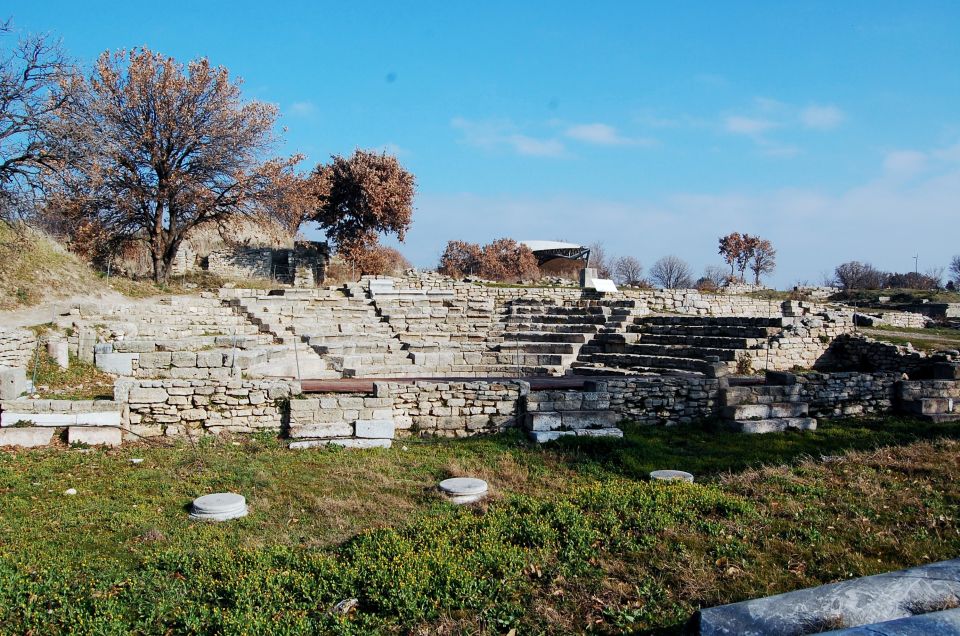
1. A sounding in the base of the Bouleuterion
for clarification of the dating of that building
2. A careful cleaning and documentation
of the Bath southwest of the Agora. This building originally excavated by Blegen has not been evaluated scientifically so
far. To the east of the bath foundations, marble blocks, and water conduits were uncovered that indicate the existence
of a Nymphaion. It can be dated to the second century A.D.
A larger project in cooperation with the Museum
Canakkale was concluded outside of Troia at the tumulus of Besik-Sivritepe (the tumulus of Achilles in antiquity) which had
been severely demolished by robbing sondages in recent years. The vertical central shaft started in 1998 was carried down
to bedrock. We found no evidence of a burial chamber. The construction scheme of the tumulus consisting of horizontal layers
of earth and rocks has been verified. The finds consist of prehistoric sherds from the surrounding and of Hellenistic sherds
which confirm the dating of the tumulus to the third century B.C. This monument existed in synchronism with nearby Achilleon
and appears as part of the construction strategy for Ilion and the Troad.